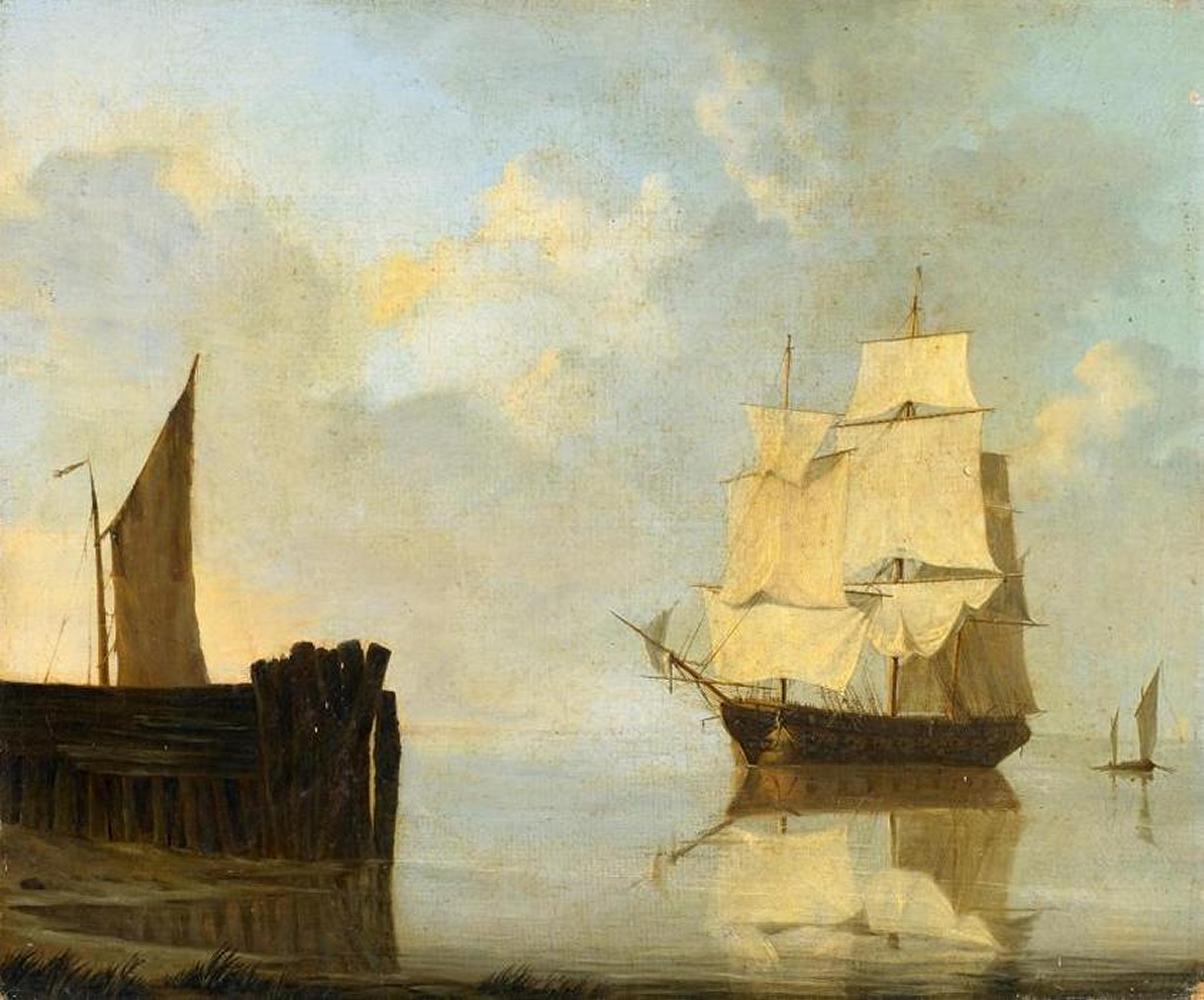
In the piney woods of what is now Livingston Parish, Louisiana, a place once called Milton Old Field stands as both a specific family landmark and a representative chapter in the larger story of how America was settled. While much of this account draws upon documented records and primary sources, some portions rely on family oral history, and certain entries in the family Bible appear to preserve oral traditions that were later committed to writing. The family whose name it bore did not arrive as abstractions or statistics. They were particular people—English Protestants from the borderlands and backcountry—who carried a bundle of habits, beliefs, institutions, and expectations across generations and geographies. Their multi-century journey from Shotover Forest in Oxfordshire, through London and Bristol, to Virginia in 1621, then into the Carolina Piedmont and Appalachian foothills, and finally into the piney woods along the Amite River, mirrors the experience of countless ordinary families who collectively built the republic and imprinted enduring regional cultures upon it.
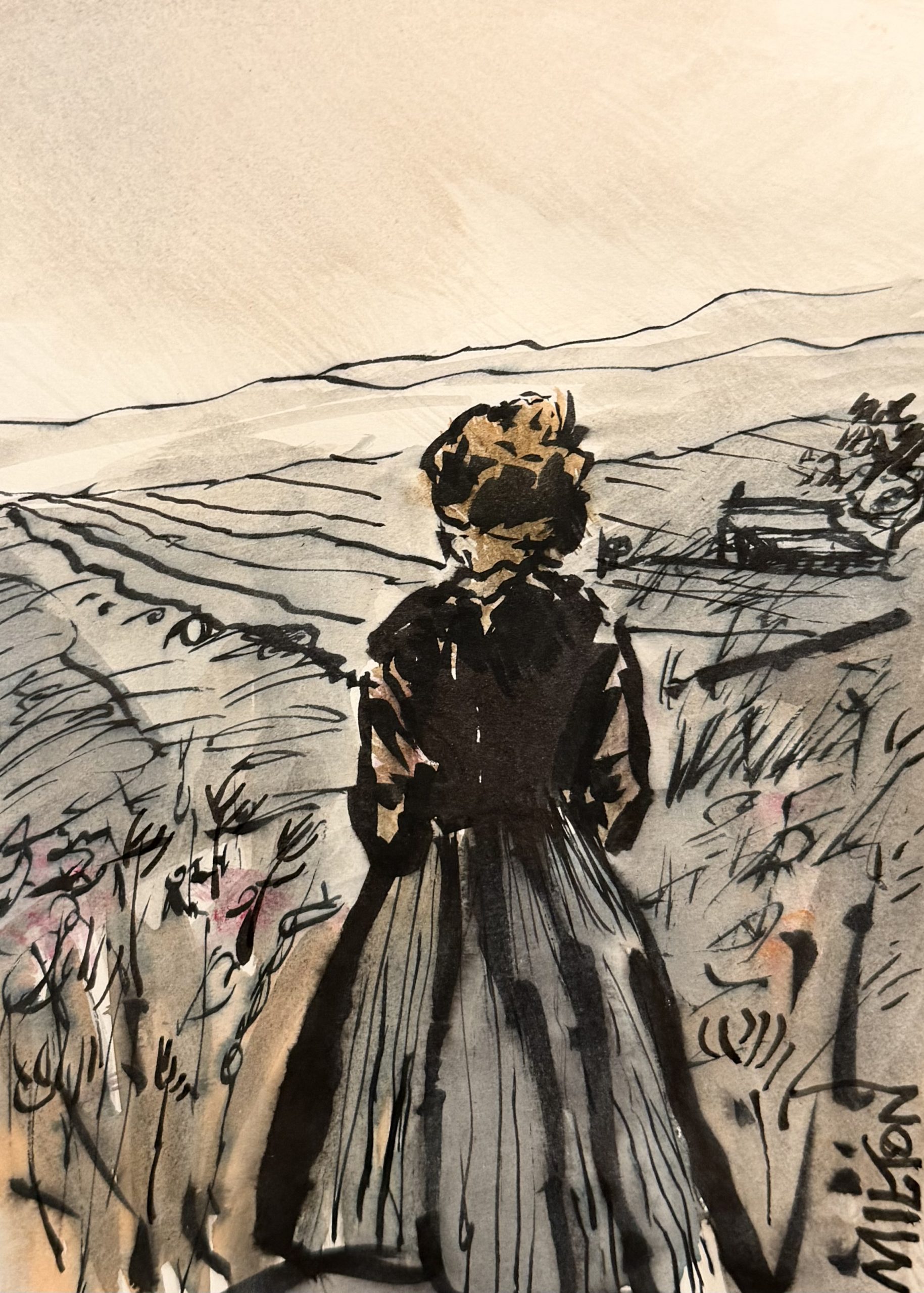
Sidebar: Berkeley Hundred – The Virginia Beginning (1621)
Berkeley Hundred (later Berkeley Plantation) on the James River in Virginia was one of the earliest “particular plantations” granted by the Virginia Company of London. In 1618–1619, investors including Richard Berkeley, Sir William Throckmorton, George Thorpe, and John Smyth of Nibley received an 8,000-acre patent. The first settlers arrived on the Margaret on December 4, 1619, and observed a day of thanksgiving to Almighty God upon landing—the first recorded English Thanksgiving in America, two years before the Pilgrims at Plymouth.
On or about January 29, 1621, the ship Supply arrived at Berkeley Hundred with approximately 50–56 passengers from Bristol, England. Among them was Richard Milton, listed as passenger #18—an apprentice scrivener who left his London training to join the Virginia venture. He was part of the second wave of Berkeley settlers, helping sustain the struggling plantation after early hardships. By the 1624/25 muster, Richard Milton was noted caring for cattle at Berkeley and nearby Shirley Hundred, receiving tobacco and milk as compensation.
George Thorpe, a key investor and leader, envisioned Christian conversion of local Native peoples and better relations, but he and others at Berkeley were killed in the March 22, 1622, Powhatan uprising. Despite these trials, Berkeley endured and later became the ancestral home of the Harrison family (birthplace of two U.S. Presidents). Today it is a National Historic Landmark open to the public, preserving the story of these earliest English planters.
For the Milton line, Richard Milton’s arrival at Berkeley Hundred marks the foundational transatlantic step. It embodies the courage, faith, and resilience that would carry his descendants westward for generations—service in wars, clearing new fields, and building communities.
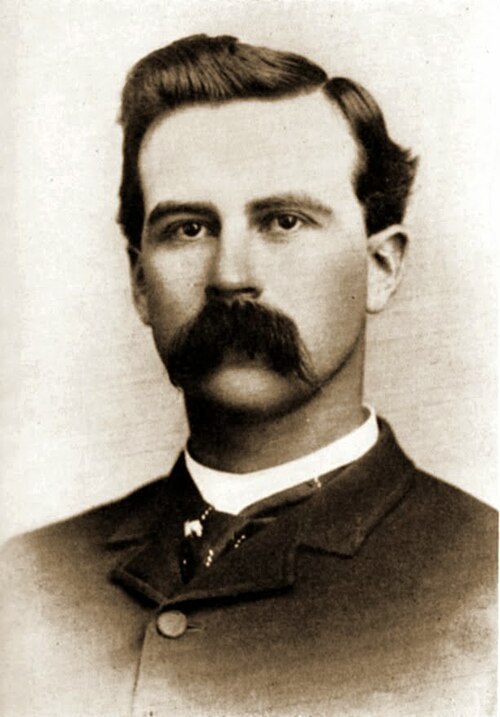
The earliest documented ancestor in the line, Richard Milton, sailed from Plymouth on the Supply (companion vessel to the Mayflower) and landed at Berkeley Hundred in Virginia in January 1621. He was part of the second wave of English settlement, a scrivener’s apprentice turned planter in the raw Jamestown-era world. Within a few generations, descendants had moved into the North Carolina backcountry. Robert Milton appears in Orange County records; a brother or close kinsman, John Milton, established himself in Halifax County. From that Halifax line descended the John Milton who became Georgia’s first Secretary of State, received electoral votes for President in 1789, and whose grandson, John Milton, served as Confederate governor of Florida. Another collateral or parallel branch produced the lawman Jefferson Davis “Jeff” Milton. These connections, documented in family traditions and corroborated across passenger lists, land records, military rolls, and later genealogical compilations, illustrate how one English stock ramified across the expanding South, producing both quiet yeomen and public figures.
By the early nineteenth century, the line had reached the Florida Parishes of Louisiana. Michael Milton (the younger) and his wife, Martha Clark Milton, traveled overland from the Amite River near Benton Ferry Landing and established a homestead on land granted for military service. The “Old Field” designation referred to cleared or naturally open ground well suited for grazing and for the communal gatherings that transformed isolated households into a neighborhood. By 1856 the federal government recognized the growing community with a post office named Milton Old Field; Michael Milton was appointed postmaster by 1858. A simple federal institution thereby linked these piney-woods settlers to the wider republic.
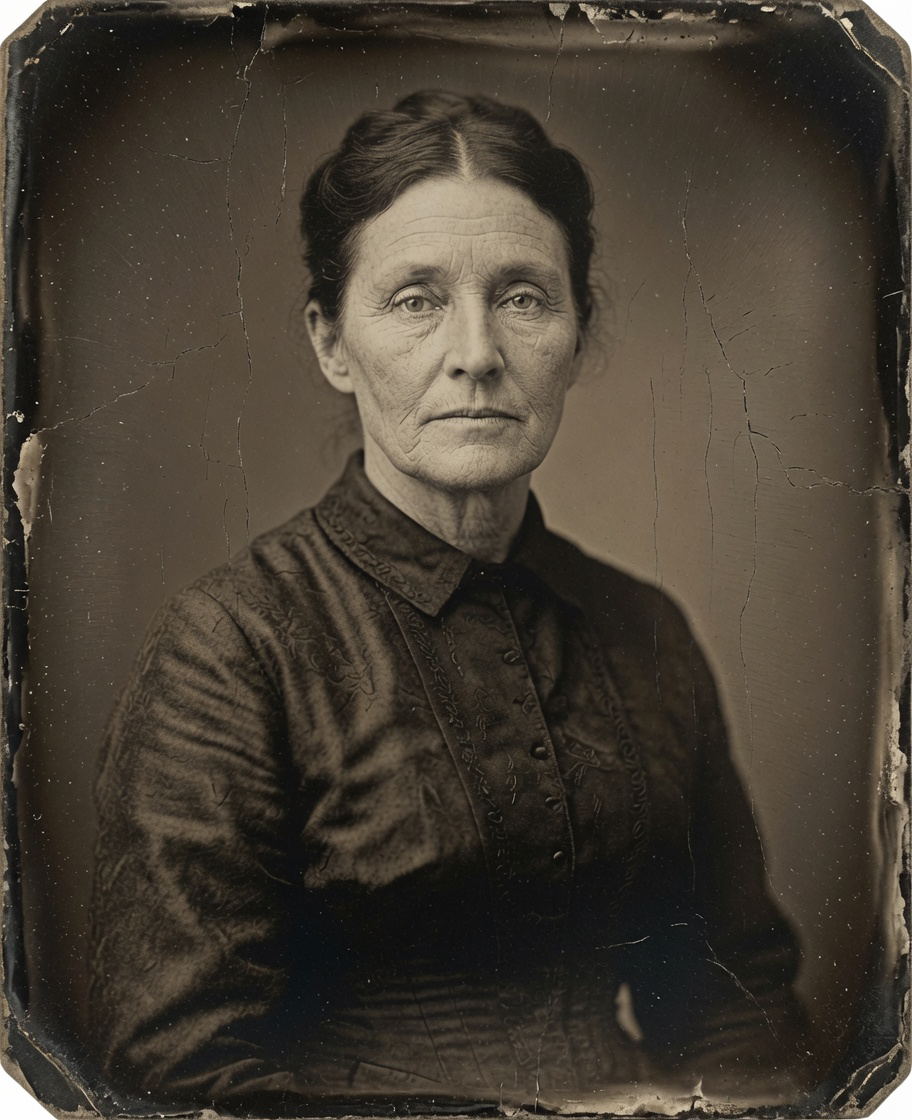
A Local Focus for “Walker, the Early Years” and the Livingston Parish Historical Community
Michael Milton the younger, son of Michael Milton the elder who was killed in the Fort Mims massacre, settled in what is now Walker, Louisiana. The settlement, originally called Milton Old Field, grew into a community with a post office and schools, thanks in part to the Milton family’s contributions. Today, a historical marker commemorates the settlement and its founder.
The story of Michael Milton (the younger) and his wife, Martha Clark Milton, is one of profound loss and courageous new beginnings. Michael the younger was the son of Michael Milton the elder, who himself was the son of Isham Milton, a Revolutionary War soldier and Methodist minister. Michael the elder left his home in North Carolina, using his father’s land bounty to claim land in Baldwin County, Alabama, where he and his wife, Mary (née Thomas) Milton (from a Quaker family in Greensboro, North Carolina), reared their sons—Michael the younger, William, and Andrew. Michael the elder was an enterprising young man who also negotiated a land bounty with Spanish authorities, helping to found what would become Milton, Florida.
Tragically, Michael the elder, along with his wife Mary Thomas Milton and their youngest son, Captain Andrew Milton (who was serving in the army), were among those killed in the Fort Mims massacre during the Creek War in 1813. A contemporary survivor report noted, “Captain Melton [sic] is among the dead.” William escaped the massacre, while Michael, the younger, was serving in the Alabama Militia. He participated in the Creek Wars and the War of 1812, including the Battle of New Orleans in 1815 under General Andrew Jackson. Records show he was discharged in New Orleans that same year. Ten years later, after returning to the family plantation on the Tensaw River in Baldwin County—where the tremendous sense of loss had changed everything—Michael, the younger, journeyed westward. He sailed up the Amite River to Benton Ferry Landing (in the area now known as Denham Springs), the western edge of the territory at the time. It was an act of resilience and a search for peace, even as he faced the ghosts of the past so close to “Red Stick” country, the tribe associated with the massacre that had taken his family.
The open, cleared ground they settled—known locally as an “old field”—proved ideal for grazing and for the gatherings that would knit scattered households into a community. By the mid-1850s, the settlement had grown enough for the federal government to open a post office. In 1856, it was officially designated Milton Old Field, with Michael Milton appointed postmaster by 1858. This small federal institution connected the isolated piney-woods families to the wider republic through mail, news, and the practical bonds of citizenship.
The name Milton Old Field honored the founding family and endured until 1890, when the post office was renamed Walker after Dr. William E. Walker, M.D., a respected local physician, state legislator, and Confederate officer. Though the official name changed, the memory of the original settlement remains alive in historical markers, family stories, and the very landscape of what is now the city of Walker.
The Milton family’s contributions extended beyond the post office. They helped set apart land for education in the early community, contributing to the foundations of what would become the Walker schools. One enduring local landmark is Levi Milton Elementary School, named for a great-uncle of later generations. The Milton Collegiate Gymnasium for Secondary Education stood among the earliest secondary educational facilities in Livingston Parish. These acts of civic generosity—donating land for schools, serving as postmaster, clearing fields, and building community institutions—reflect the quiet, practical leadership of ordinary settler families in the Florida Parishes.
Today, a historical marker in Walker commemorates Milton Old Field and its founder. The story of this settlement is woven into the broader heritage of Livingston Parish and the Florida Parishes, a region whose Anglo-American, Appalachian-influenced character distinguishes it within Louisiana while linking it culturally to neighboring areas of Mississippi, Alabama, and North Florida.
This local history is offered with gratitude to the families and historians who preserve it—especially to Jill Benton Glass and the members of the Walker the Early Years Facebook group, whose dedication keeps these stories alive for new generations. The Benton family’s long-standing leadership in Livingston Parish historical efforts, and the significance of Benton Ferry Landing as the point from which Michael Milton and Martha Clark began their journey into the piney woods, form an essential chapter in our shared community memory.
For further local exploration:- Historical marker for Walker / Milton Old Field (Livingston Parish)- City of Walker official history page- Livingston Parish historical resources and the Walker the Early Years community
This settlement was no isolated event. It belonged to a recognizable stream of Carolina and Appalachian migration into the Old Southwest. These families brought with them household independence, evangelical Protestantism, a martial tradition of citizen-soldiers, and a deep attachment to local self-government. The Florida Parishes they helped populate remain culturally distinct to this day—more aligned with the piney-woods South of Mississippi, Alabama, and North Florida, and with the Piedmont and Western Carolina uplands, than with the Francophone culture that later dominated South Louisiana through media and tourism. The Milton story thus exemplifies how particular founding populations created lasting regional “nations” within the larger United States.
The family’s service continued across the nation’s wars. Descendants fought in the Revolution, the War of 1812 (for which Michael Milton received land), and the Civil War. One great-great-grandfather, Joseph Austin Milton, served in the Confederate forces; like many Southern yeoman families, the Miltons afterward faced the loss of land previously granted by the U.S. government for military service. Reconstruction and its aftermath scattered or diminished holdings, yet the pattern of duty persisted. In the twentieth century, Jesse Ellis Milton (1911–1964) of Walker served as a naval officer and merchant seaman in World War II, sailing to distant ports while remaining rooted in the same Louisiana parish his ancestors had helped settle.
Tangible legacies endure in Walker itself. A historical marker commemorates Milton Old Field and its founder. Levi Milton Elementary School bears the name of a great-uncle. The Walker schools trace their origin in part to land set apart by the Milton family for education; the Milton Collegiate Gymnasium for Secondary Education was among the earliest secondary institutions in Livingston Parish. These institutions—post office, school, church, and civic gathering place—were the ordinary but essential building blocks of the American community.
The long arc from Richard Milton’s arrival in 1621 to the present generation is therefore not merely private genealogy. It is a concrete model of how America was peopled and how its regions acquired their distinctive characters. One family’s decisions—to leave England, to move from Virginia into the Carolina backcountry, to push farther into the piney woods, to serve in the nation’s wars, to clear fields and build schools—were replicated, with local variations, by thousands of other households. As Joel Garreau mapped in The Nine Nations of North America (1981) and as Colin Woodard traced historically in American Nations (2011), these founding streams created enduring cultural geographies that still shape American life more powerfully than state lines or national rhetoric. The Carolina-Appalachian yeomanry that settled Milton Old Field belonged to one such stream—Greater Appalachia and its extensions—whose values of personal liberty, martial honor, evangelical faith, and localism continue to influence the Florida Parishes and analogous regions across the South and beyond.
In an age that often reduces history to the celebrated or the aggrieved, the Milton record offers a different lens: the cumulative witness of ordinary families who treated settlement as stewardship, military service as obligation, education as inheritance, and the transmission of a particular way of life as sacred duty. And sometimes we learn that they moved in the midst of tragedy, to locate new life in a new land far from the pain of yesterday, to seek a dream or to run from a broken one. In other words, they were like us. Their story is your story as well as mine. From the decks of the Supply to the cleared fields along the Amite River, from Confederate service and Reconstruction loss to World War II voyages and modern civic institutions, one family’s journey illuminates the larger pattern by which particular peoples built a republic of similar families. Milton Old Field, now Walker, Louisiana, remains one visible marker of that enduring achievement.
Scholarly Sources
Adams, John. Warrior at Heart: Governor John Milton, King Cotton, and Rebel Florida 1860-1865. Friesen Press, 2015.
Banks, Thomas Christopher. The Dormant and Extinct Baronage of England: Or, An Historical and Genealogical Account of the Lives, Public Employments, and Most Memorable Actions of the English Nobility Who Have Flourished from the Norman Conquest. J. White, 1808.
Bergeron, Arthur W., Jr. Guide to Louisiana Confederate Military Units, 1861–1865. LSU Press, 1996.
Boehrer, Bruce. “Milton in America: The Case of Jackson County, Florida.” Textual Practice 20, no. 1 (2006): 1–24. https://doi.org/10.1080/09502360600559746.
British History Online. “Parishes: Stanton St. John.” Accessed February 24, 2025. https://www.british-history.ac.uk/vch/oxon/vol5/pp282-293.
Bunn, Mike, and Clay Williams. Old Southwest to Old South: Mississippi, 1798-1840. University Press of Mississippi, 2023.
Bunn, Mike, and Clay Williams. Settling the Mississippi Territory: The Origin of Two States. The History Press, 2025.
Cook, Minnie G. “Frances Grevill West Peirsey Mathews.” The William and Mary College Quarterly Historical Magazine 15, no. 3 (1935): 299–303. https://doi.org/10.2307/1923185.
Davis, William C. The Rogue Republic: How Would-Be Patriots Waged the Shortest Revolution in American History. HMH, 2011.
Hatch, Charles E., Jr. The First Seventeen Years: Virginia, 1607-1624. Clearfield, 1997.
Hendricks, Christopher E. The Colonial Towns of Piedmont, North Carolina. University of Tennessee Press, 2024.
Link, William A. North Carolina: Change and Tradition in a Southern State. John Wiley & Sons, 2017.
Marks, Henry S. “Boundary Disputes in the Republic of West Florida in 1810.” Louisiana History: The Journal of the Louisiana Historical Association 12, no. 4 (1971): 355–65. https://www.jstor.org/stable/4231217.
Masson, David. The Life of John Milton: Narrated in Connexion with the Political, Ecclesiastical, and Literary History of His Time. P. Smith, 1946.
McCartney, Martha W. Virginia Immigrants and Adventurers, 1607-1635: A Biographical Dictionary. Genealogical Publishing Com, 2007.
McIlhany, Hugh Milton. Some Virginia Families: Being Genealogies of the Kinney, Stribling, Trout, McIlhany, Milton, Rogers, Tate, Snickers, Taylor, McCormick, and Other Families of Virginia. Stoneburner & Prufer, printers, 1903.
Milton, Michael Anthony. Reframing: Art in Light of the Reformation. Independently published, n.d.
National Gallery, London. “Joseph Mallord William Turner | Rain, Steam, and Speed – The Great Western Railway | NG538.” Accessed May 13, 2026. https://www.nationalgallery.org.uk/paintings/joseph-mallord-william-turner-rain-steam-and-speed-the-great-western-railway.
Owsley, Frank L. “The Pattern of Migration and Settlement on the Southern Frontier.” The Journal of Southern History 11, no. 2 (1945): 147–76. https://doi.org/10.2307/2198171.
ProQuest. “A Political History of the Mississippi Territory.” Accessed July 12, 2026. https://www.proquest.com/openview/9e913283ea3b27a26ad173d041ccf4bf/1?pq-origsite=gscholar&cbl=18750&diss=y.
ProQuest. “The Indian Trading Path and Colonial Settlement Development in the North Carolina Piedmont.” Accessed July 12, 2026. https://www.proquest.com/openview/f17d34099f28904947541cea6ad8a6e9/1?pq-origsite=gscholar&cbl=18750.
Ransome, David R. “‘Shipt for Virginia’: The Beginnings in 1619-1622 of the Great Migration to the Chesapeake.” The Virginia Magazine of History and Biography 103, no. 4 (1995): 443–58. https://www.jstor.org/stable/4249538.
Silver, James Wesley. “North Carolinians in Mississippi History.” The North Carolina Historical Review 22, no. 1 (1945): 43–57. https://www.jstor.org/stable/23515062.
Smith, Miles. Review of The Rogue Republic: How Would-Be Patriots Waged the Shortest Revolution in American History, by William C. Davis. The Florida Historical Quarterly 92, no. 1 (2013): 128–30. https://www.jstor.org/stable/43487552.
Taylor & Francis. “A Conquering Spirit: Fort Mims and the Redstick War of 1813–1814.” Journal of Conflict Archaeology 3, no. 1 (n.d.). Accessed July 12, 2026. https://www.tandfonline.com/doi/abs/10.1163/157407807X257485.
U.S. Customs and Border Protection. “Border Patrol History.” Accessed August 12, 2019. https://www.cbp.gov/border-security/along-us-borders/history.
U.S. Customs and Border Protection. “Jefferson Davis Milton a.k.a Jeff Milton 1861-1947.” Accessed August 12, 2019. https://www.cbp.gov/about/history/timeline/timeline-date/jefferson-davis-milton-aka-jeff-milton-1861-1947.
Virginia Company of London. The Records of the Virginia Company of London. U.S. Government Printing Office, 1906.
A Note on Sources and Corrections
Some portions of this account are drawn from family oral history, and certain entries in the family Bible appear to preserve oral traditions that were later committed to writing. We have noted these where relevant. We warmly welcome corrections, additional documentation, or new information from readers. These will be incorporated into subsequent editions or made available in online versions of this work.