The Jericho Before Us
All of us, at one time or another, face obstacles—those daunting barriers that loom between where we stand and where the Lord beckons us to go. Like shadows cast across a Southern landscape, these impediments—be they struggles at work, fractured relationships, faltering health, or a wavering heart—can seem as impregnable as the ancient walls of Jericho. Yet, the book of Joshua offers us a map, a way through the wilderness of our challenges to the promised land of God’s purpose. This chapter, drawn from the first part of a sermon delivered through Faith for Living, explores how Joshua’s encounter with Jericho speaks to our own battles, inviting us to trust in the Lord’s provision and follow His lead to overcome. As we settle into this sacred narrative, may we name the Jerichos in our lives and find the faith to see their walls come tumbling down.
The Text: Joshua 5:13–6:26
Let us turn to the inerrant and infallible Word of God, beginning with Joshua 5:13–15 and continuing through selected passages in chapter 6:
When Joshua was by Jericho, he lifted up his eyes and looked, and behold, a man was standing before him with his drawn sword in his hand. And Joshua went to him and said to him, “Are you for us, or for our adversaries?” And he said, “No; but I am the commander of the army of the Lord. Now I have come.” And Joshua fell on his face to the earth and worshiped and said to him, “What does my Lord say to his servant?” And the commander of the Lord’s army said to Joshua, “Take off your sandals from your feet, for the place where you are standing is holy.” And Joshua did so. (Joshua 5:13–15, ESV)
Now Jericho was shut up inside and outside because of the people of Israel. None went out, and none came in. And the Lord said to Joshua, “See, I have given Jericho into your hand, with its king and mighty men of valor. You shall march around the city, all the men of war going around the city once. Thus shall you do for six days. Seven priests shall bear seven trumpets of rams’ horns before the ark. On the seventh day you shall march around the city seven times, and the priests shall blow the trumpets. And when they make a long blast with the ram’s horn, when you hear the sound of the trumpet, then all the people shall shout with a great shout, and the wall of the city will fall down flat, and the people shall go up, every man straight before him.” (Joshua 6:1–5, ESV)
The passage continues with Joshua’s obedience, the people’s march, and the miraculous fall of Jericho’s walls on the seventh day, culminating in the city’s capture and the sparing of Rahab (Joshua 6:15–26). The grass withers, and the flowers fade, but the Word of the Lord endures forever. Let us pray:
Lord, may the words of my mouth and the meditations of our hearts be acceptable in Your sight, O Lord, our strength and our redeemer. Amen.
The Obstacles We Face
Life, in its raw and ragged beauty, is a journey marked by obstacles. I recall a moment from my youth, playing football under the weight of a Southern sun. I’d broken through the defensive line, the ball tucked tight, the goal line shimmering like a promise. Only two defenders—slight, tenacious fellows—stood in my way. I could’ve dodged them, but pride urged me to charge through. They clung to me, their small hands gripping my jersey, then my shoulder pads, and finally my hip pads, pulling downward as I barreled toward the end zone. I crossed the line to cheers, but also to laughter. My pants, dragged down by their persistence, were around my ankles. The crowd roared, the cheerleaders fled, and I stood exposed, my triumph tinged with humiliation. That moment taught me a truth: how we face obstacles reveals the most intimate parts of who we are.
So it is with the obstacles in your life. Perhaps it’s a strained marriage, where vows made in hope now strain against the weight of daily friction. Maybe it’s the ache of a divorce, the dream of a new beginning clouded by past pain. For some, it’s the financial strain of following God’s call—seminarians moving families across the country, trusting in providence while bills pile high. For others, it’s the academic rigor of study, the balancing act of time, or the quiet wrestle with doubt that keeps you from the land of milk and honey God has promised. What are your Jerichos? Name them in your heart, for the story of Joshua speaks directly to them.
Jericho: A Historical and Theological Reality
Jericho was no mere metaphor. Its walls, archaeologists tell us, rose 25 feet high and six feet thick—a Canaanite fortress embodying invincibility. As one scholar notes, “The story of the fall of Jericho must not be treated as a mere product of Israel’s faith. It is a historical narrative as well as a theological presentation.” For Joshua, standing on the threshold of the Promised Land, Jericho was the first great challenge after the wilderness. Behind him lay the trials of Egypt and the desert; before him, the land of promise. But between them stood this impregnable city, a symbol of all that opposes God’s purposes.
We know the story from our Sunday school songs: Joshua fought the battle of Jericho, and the walls came a-tumbling down. But the how of it—the way Joshua approached this obstacle—offers timeless lessons for overcoming the barriers in our lives. The narrative unfolds in seven movements, each marked by the number seven, the biblical symbol of completion, of Sabbath rest, of God’s perfect work. These steps guide us to victory, not by human strength, but by divine leading.
The First Step: Follow the Leader
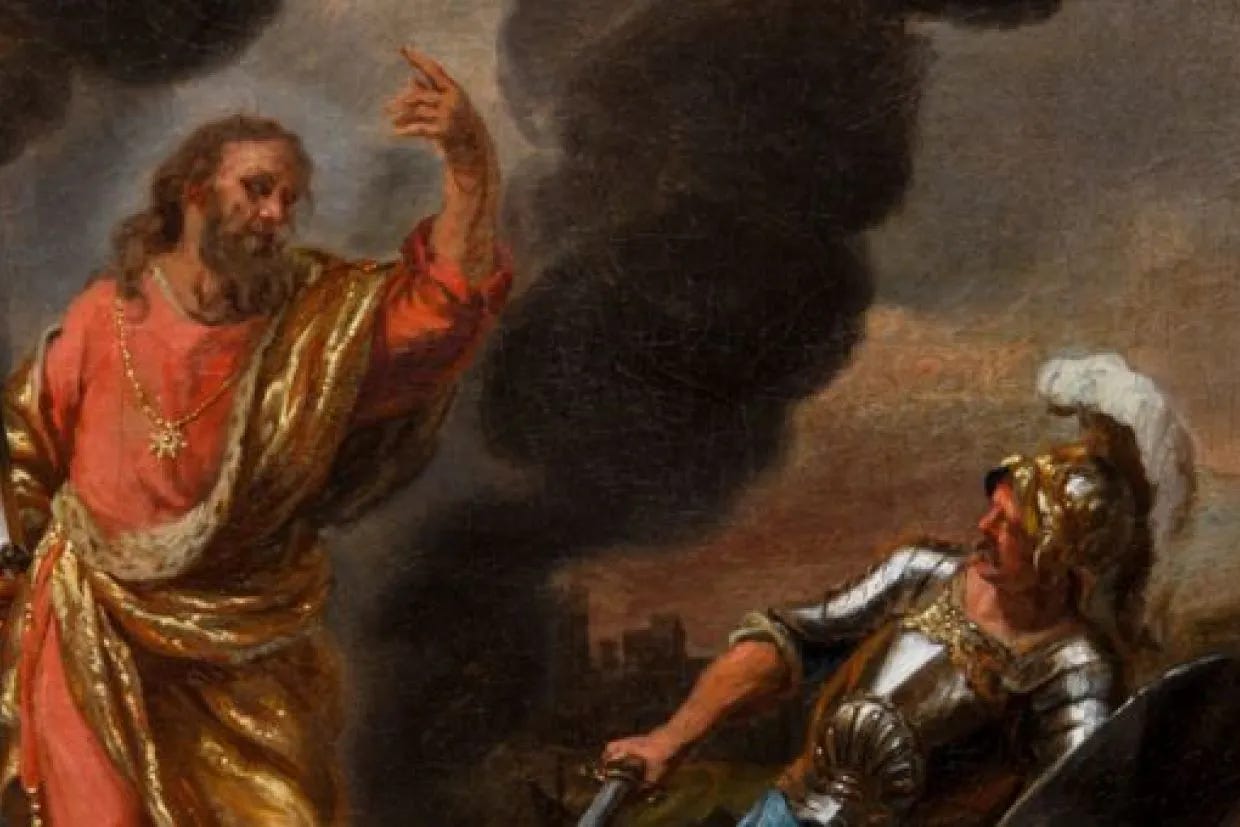
The first movement in overcoming life’s obstacles is to follow the true Leader. In Joshua 5:13, we encounter a mysterious figure: “When Joshua was by Jericho, he lifted up his eyes and looked, and behold, a man was standing before him with his drawn sword in his hand.” Joshua, bold and pragmatic, demands, “Are you for us, or for our adversaries?” The response is startling: “No; but I am the commander of the army of the Lord. Now I have come.” Joshua falls on his face, worships, and asks, “What does my Lord say to his servant?” The commander replies, “Take off your sandals from your feet, for the place where you are standing is holy.”
This is no ordinary encounter. As Matthew Henry observes, this commander is the pre-incarnate Christ, the eternal Word appearing as a warrior to Joshua, just as He came as a traveler to Abraham or a restorer to Peter. No angel accepts worship; this figure does, revealing His divine nature. He meets Joshua at the foot of Jericho’s walls, where the impossible looms, and declares the ground holy. Like Moses at the burning bush, Joshua learns that leadership begins with surrender, with recognizing that the true Leader is Christ Himself.
This truth echoes through Scripture. In John 21, Christ restores Peter, meeting him in his failure to “tend my sheep.” In Acts 18, He strengthens Paul in Corinth, saying, “Do not be afraid, but go on speaking… for I am with you.” In Joshua 1:9, God commands, “Be strong and courageous. Do not be frightened, and do not be dismayed, for the Lord your God is with you wherever you go.” Christ comes to us at our point of need, before our own Jerichos, and becomes what we require—strength, forgiveness, courage. To overcome, we must first follow Him, acknowledging that we are not in control.
I shared this lesson with my son, a senior patrol leader in his Boy Scout troop, as he prepared to lead 60 boys on a campout. “Son,” I said, “all great leaders are great followers. They follow a vision, a principle, a person—Christ Himself. Others follow you, but they’re really following Him.” So it is with us. Before Jericho, we learn to take off our sandals, to stand on holy ground, and to follow the Leader.
The Sabbath Subplot: Resting in God’s Promises
A question arises: how does the Sabbath weave through this story? Though not named explicitly, its presence is unmistakable. The number seven—six days of marching, seven circuits on the seventh day—echoes the rhythm of creation and rest, of Shabbat, the “Queen of Days.” The Passover, celebrated before the march, points to God’s deliverance, a foretaste of the ultimate rest found in Christ. As Augustine said, “What God has required, God has provided.” The seventh day, with its trumpets and shouts, is not merely a tactic but a testimony to resting in God’s promises.
The Sabbath is no mere day off; it is a cycle of worship, reflection, and renewal, pointing to Christ’s finished work. In Joshua’s story, it underscores that victory comes not by human effort but by trusting in God’s provision. The walls fall not because of military might but because Israel rests in obedience to God’s command. So too, our Jerichos—whether unbelief, doubt, or practical struggles—crumble when we rest in Christ, the true Leader who fights for us.
Conclusion: Pausing Before the Walls
Here we pause, on the fields before Jericho, with the walls still standing but the promise of victory assured. In the chapters to come, we will trace the remaining steps of Joshua’s journey, but for now, let us reflect. What are the obstacles in your life? Name them before the Lord. Whether they are financial burdens, relational wounds, or the silent ache of unbelief, bring them to the holy ground where Christ meets you. He is the commander of the Lord’s army, present in your need, ready to lead you through. As we rest in Him, as we follow the Leader, we find the faith for living that overcomes even the mightiest walls.
In the name of the Father, and of the Son, and of the Holy Spirit. Amen.
Subscribe to our newsletter to receive a weekly Sunday Bible message and a post oncer per week on Christ and culture: https://michaelamilton.com
Faith for Living with Dr. Michael A. Milton review by Blinkist.